




Opening Ceremony of the 2nd ICMSD
After the ISMSD Launching Ceremony, the Second ICMSD began (Figures 1 and 2). Prof. Caishan Liu, Chair of the Organizing Committee and Organizing Chair for the Second ICMSD, presided over the opening ceremony (Figure 3).

Fig.1 Opening ceremony site of the Second ICMSD.
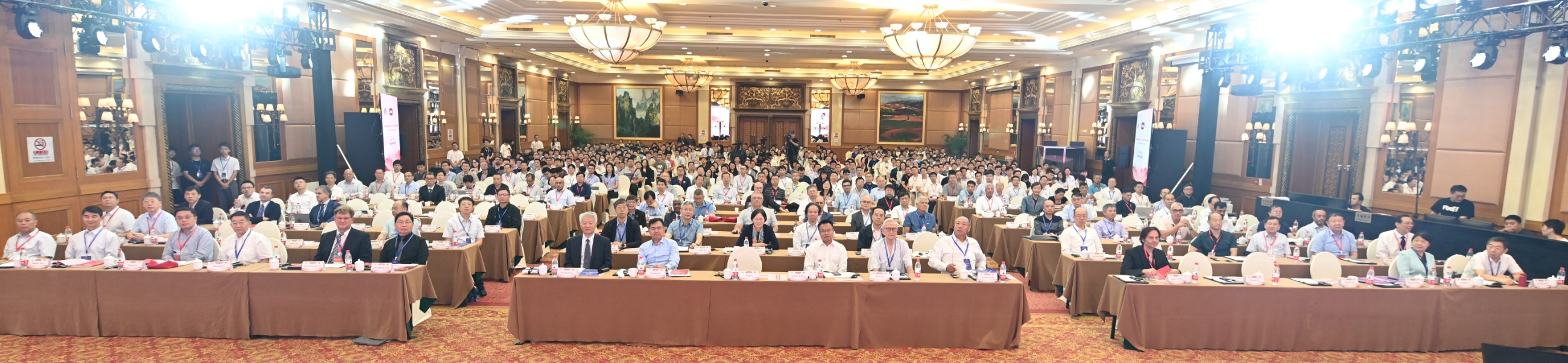
Fig.2 In‐person attendees at the Second ICMSD opening ceremony.
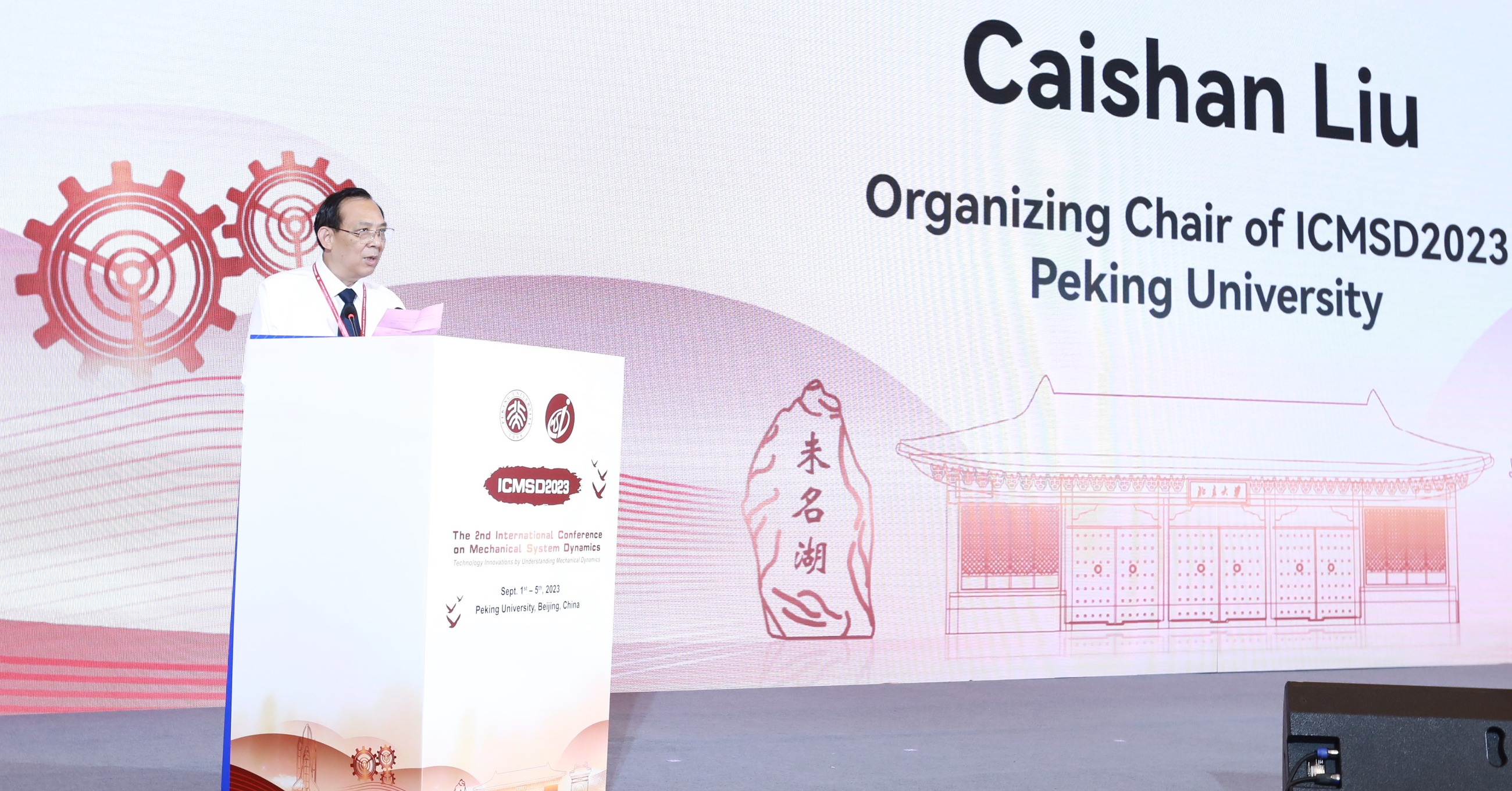
Fig.3 Prof. Caishan Liu, Chair of the Second ICMSD Organizing Committee and Organizing Chair, presides over the Second ICMSD opening ceremony.
Prof. Moubin Liu, Deputy Dean of the College of Engineering, Peking University (Figure 3); Prof. Zhuo Zhuang, Vice‐President of the Beijing Society of Theoretical and Applied Mechanics (Figure 4); and Prof. Xu Guo, Vice‐President of the Chinese Society of Theoretical and Applied Mechanics, gave congratulatory speeches successively (Figure 5). Mr. Guihua Zhang, Secretary of the Secretariat of the China Association for Science and Technology, also delivered a congratulatory speech on the opening ceremony (Figure 6).
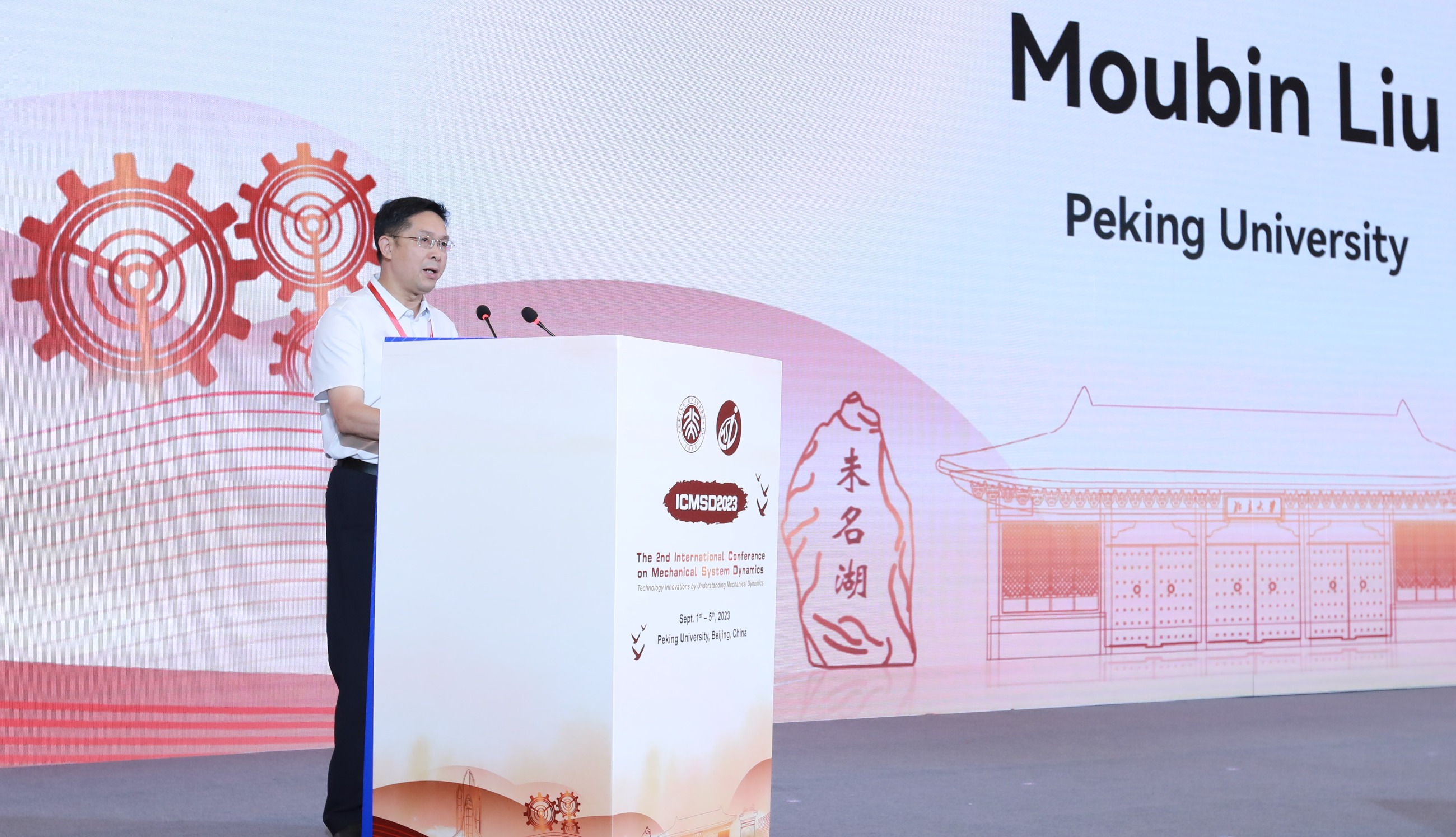 | 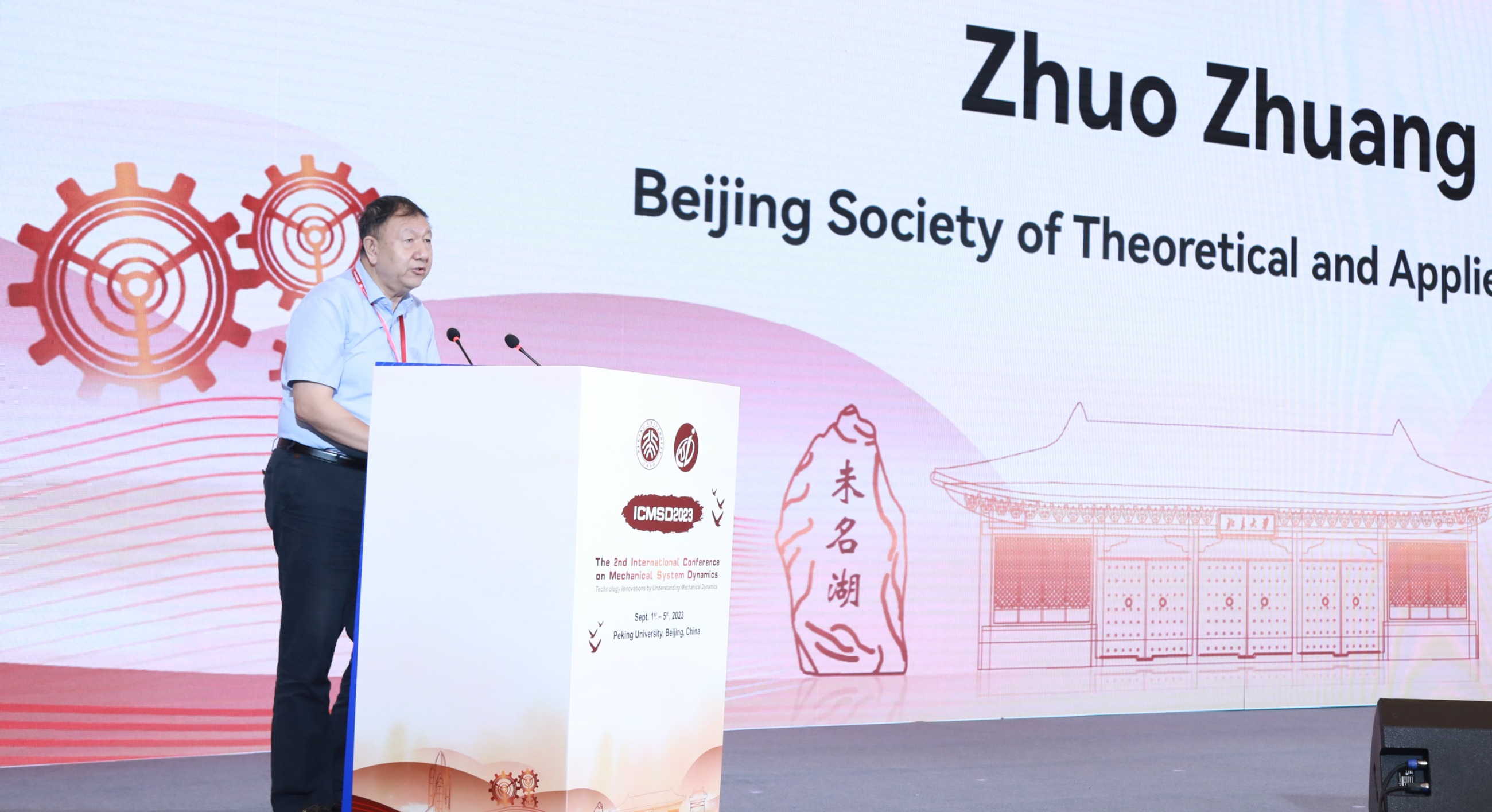 |
| Fig.3 Prof. Moubin Liu, Deputy Dean of the College of Engineering, Peking University, gives a congratulatory speech. | Fig.4 Prof. Zhuo Zhuang, Vice‐President of the Beijing Society of Theoretical and Applied Mechanics, gives a congratulatory speech. |
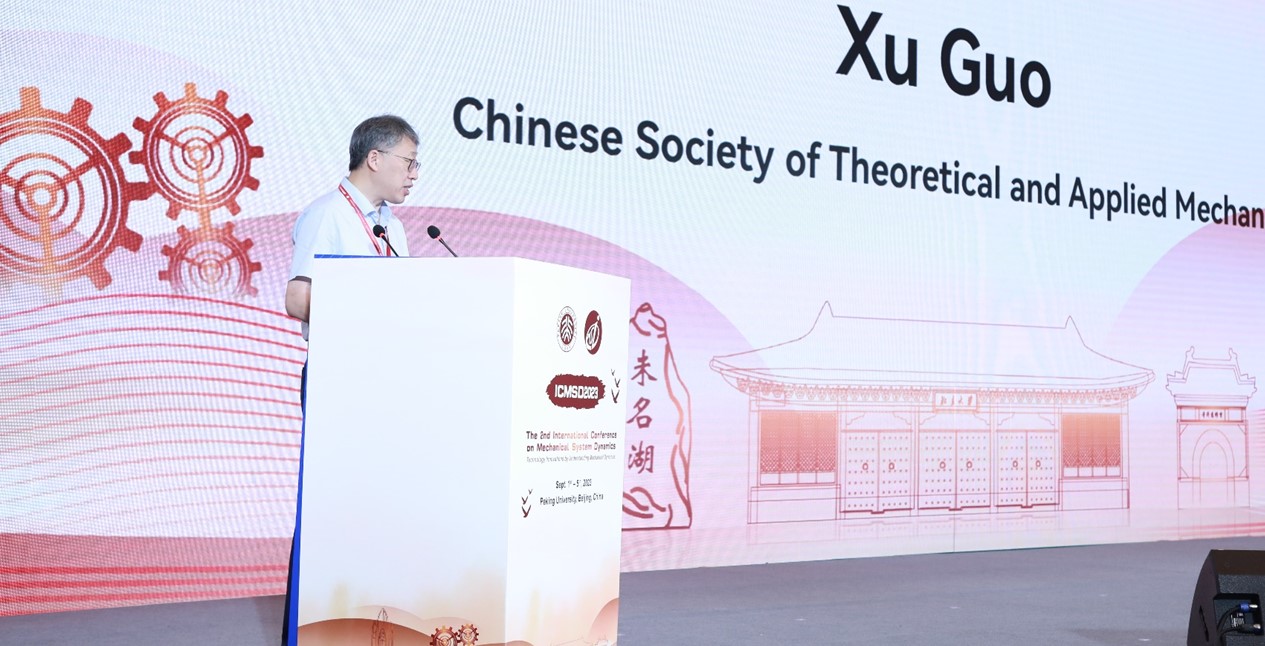 | 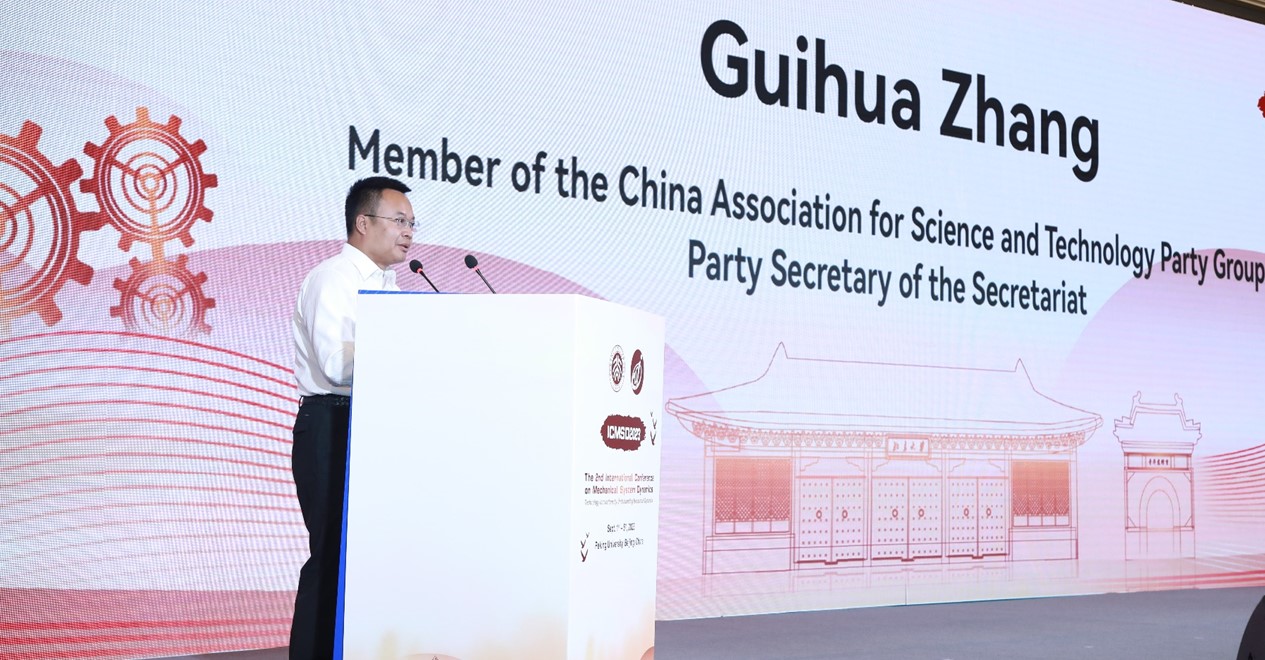 |
| Fig.5 Prof. Xu Guo, Vice‐President of the Chinese Society of Theoretical and Applied Mechanics, gives a congratulatory speech. | Fig.6 Mr. Guihua Zhang, Secretary of the Secretariat of the China Association for Science and Technology, gives a speech. |
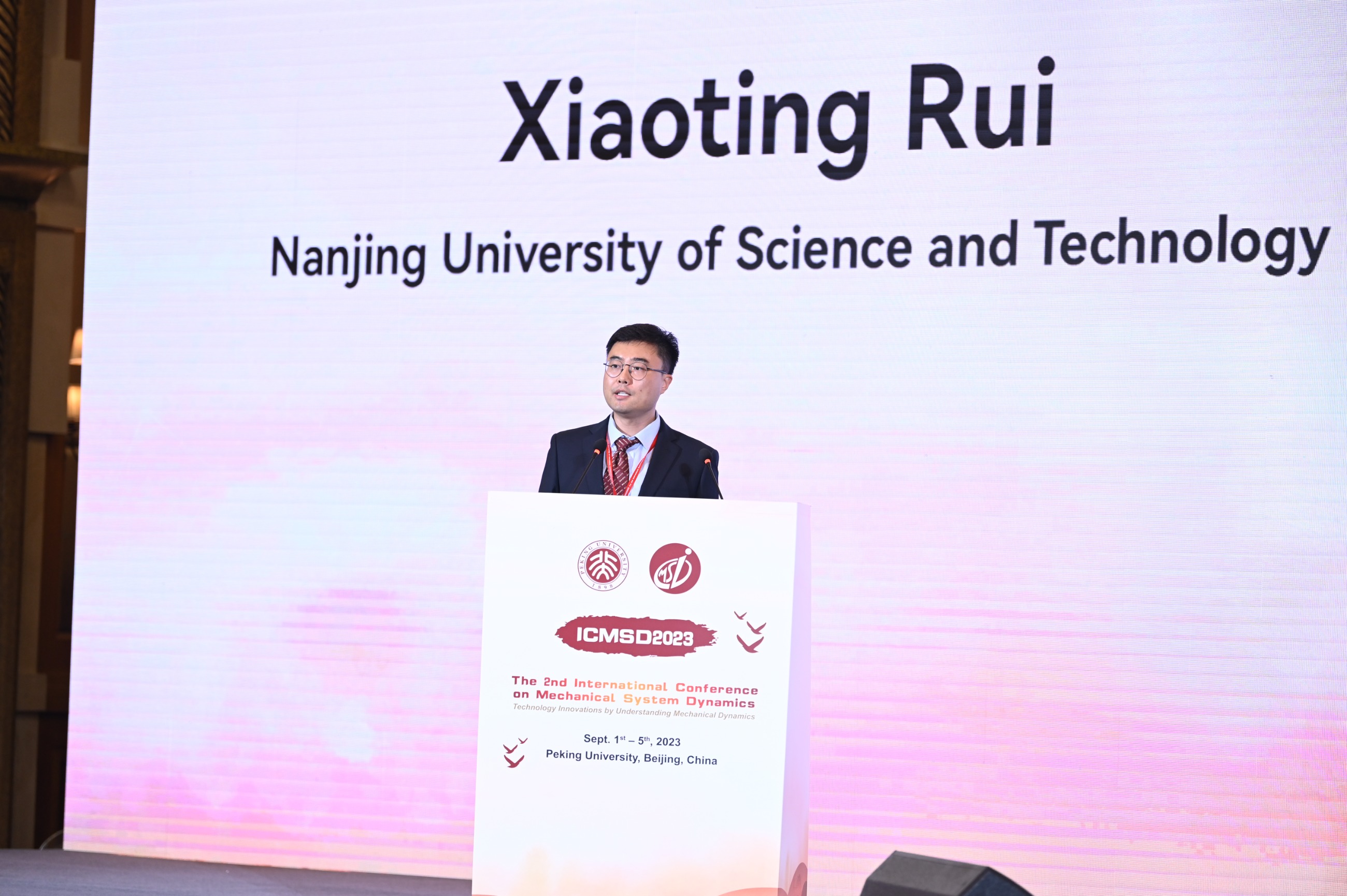
Prof. Xiaoting Rui, ICMSD Chair, delivered the opening speech (Figure 7). “Last summer, the First ICMSD was successfully held in Nanjing, overcame the pandemic difficulties, and received strong and active responses from the community. The conference contributed significantly to advancing major relevant scientific research. The Second ICMSD received more than 600 submissions from 204 affiliations in 23 countries, and will have 378 academic presentations. Among them, 11 plenary and keynote lectures are presented by the internationally renowned scientists, including seven members of the National Academy of Sciences/Engineering, or presidents of international societies, or Editors‐in‐Chief of international journals. It is hoped that the research results presented at the Second ICMSD will promote scientific and technological innovation, and the development of science, technology, and industry by understanding scientific laws of mechanical system dynamics,” as was pointed out by Prof. Xiaoting Rui. Finally, Prof. Rui announced the opening of the Second ICMSD.
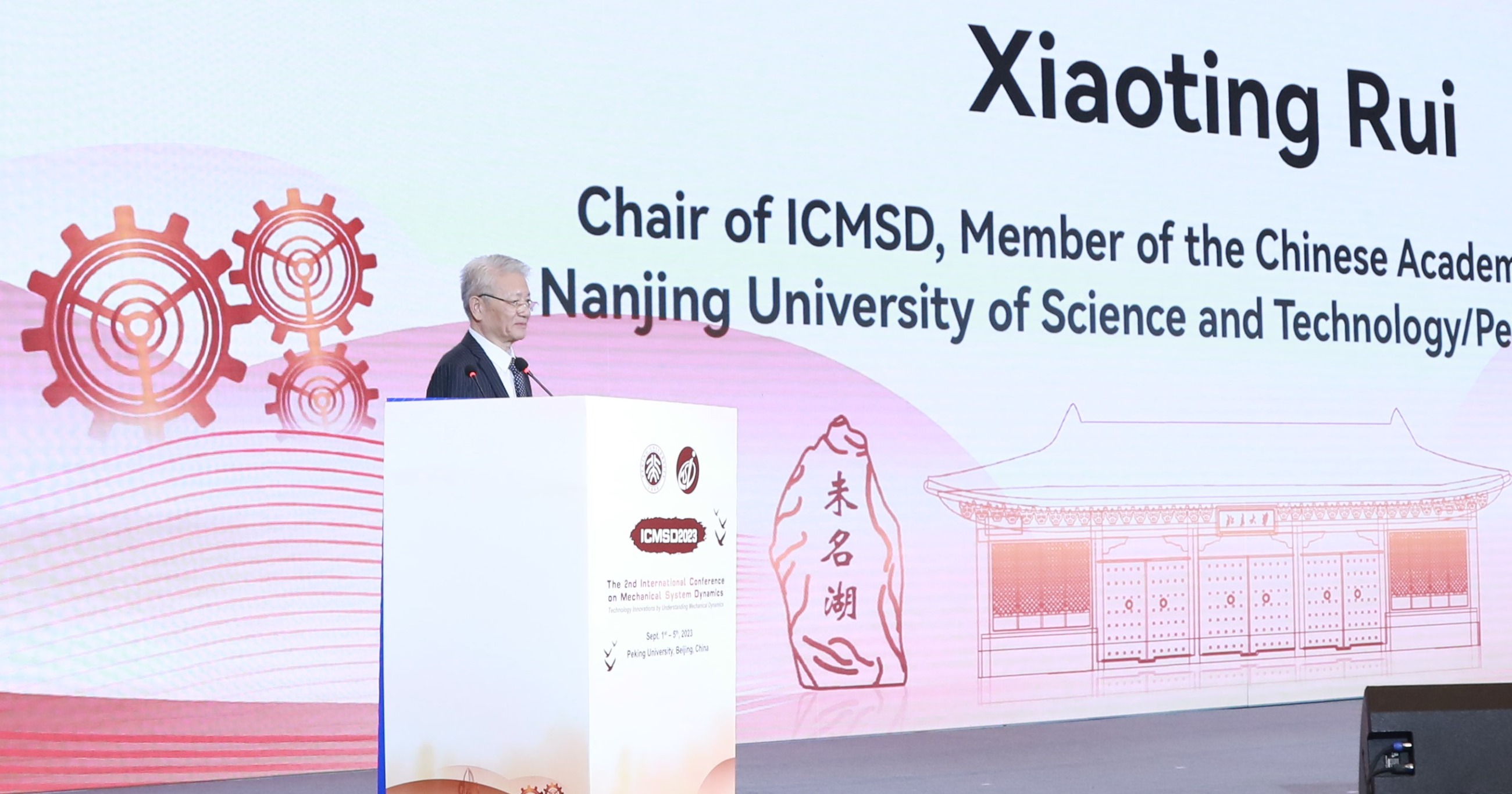
Fig.7 Prof. Xiaoting Rui, Member of the Chinese Academy of Sciences and ICMSD Chair, delivers the Second ICMSD opening speech.
During the conference, the 11 plenary and keynote lectures summarized the latest advances in mechanical system dynamics, representing the frontier of theory and application of this field, and highlighting future directions for basic theory, interdisciplinary, software development, and engineering applications concerning mechanical system dynamics (Figures 8–18).
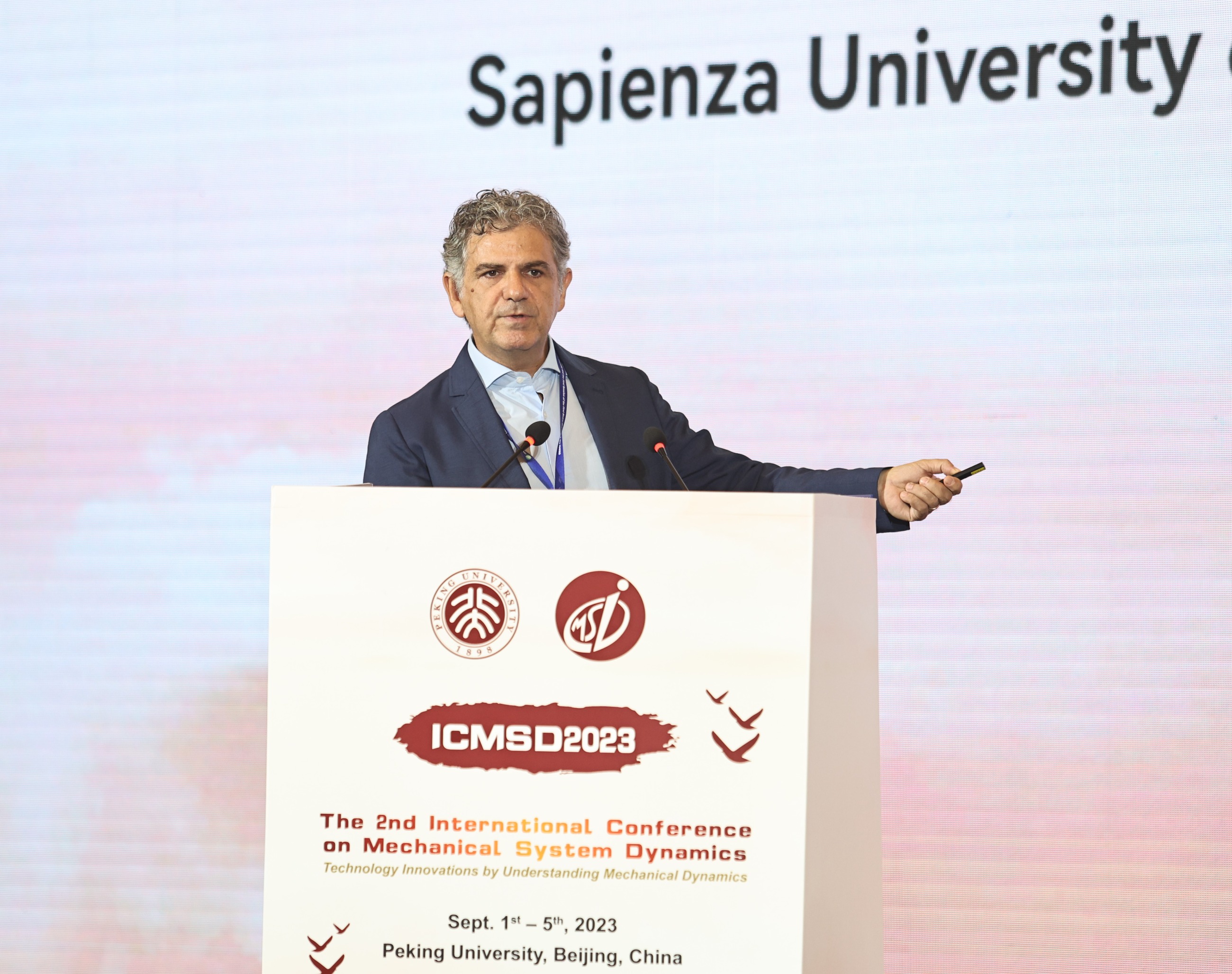 | 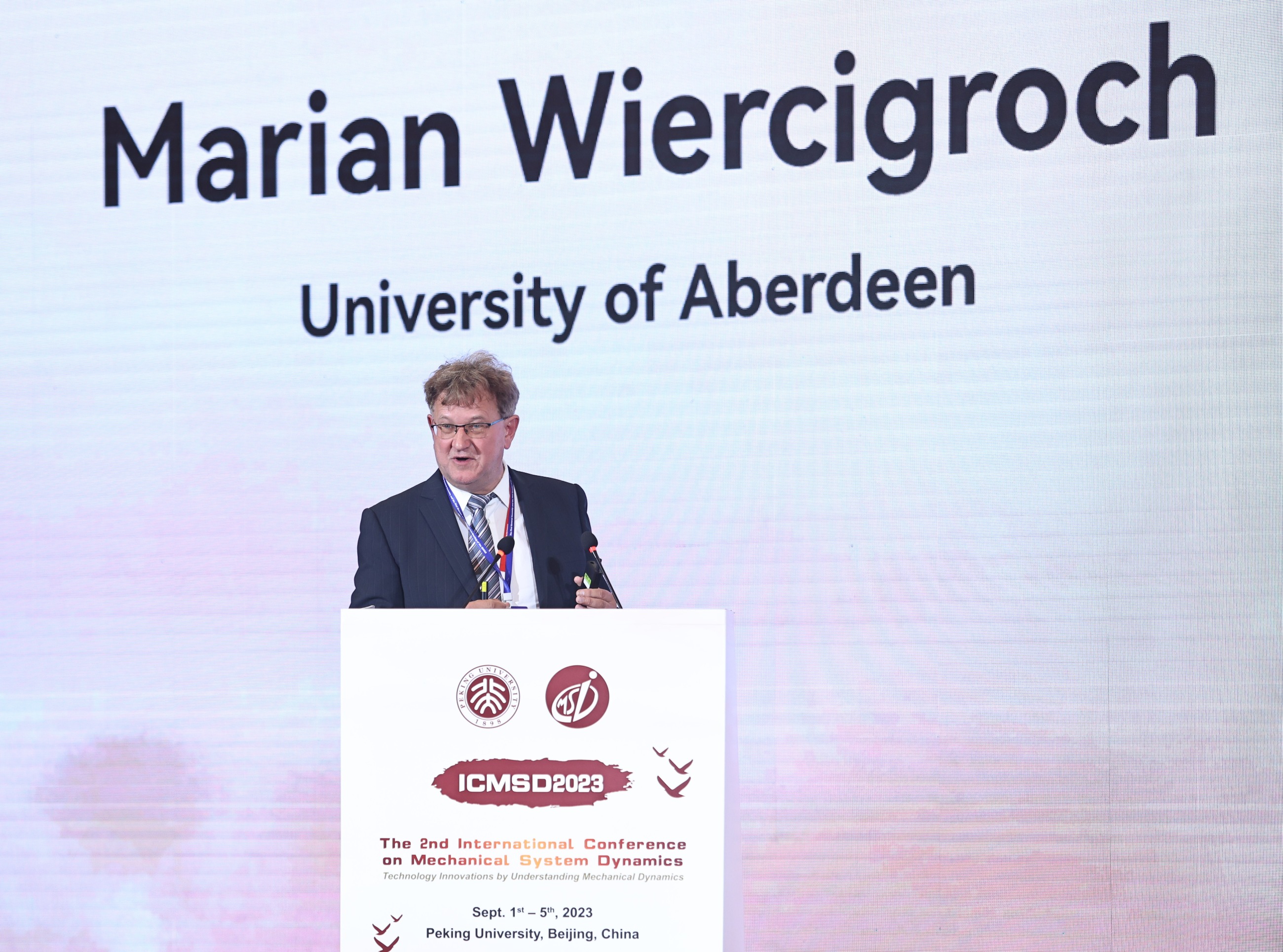 |
| Fig.8 Prof. Walter Lacarbonara gives a plenary and keynote lecture. | Fig.9 Prof. Marian Wiercigroch, Fellow of the Royal Society of Edinburgh, gives a plenary and keynote lecture. |
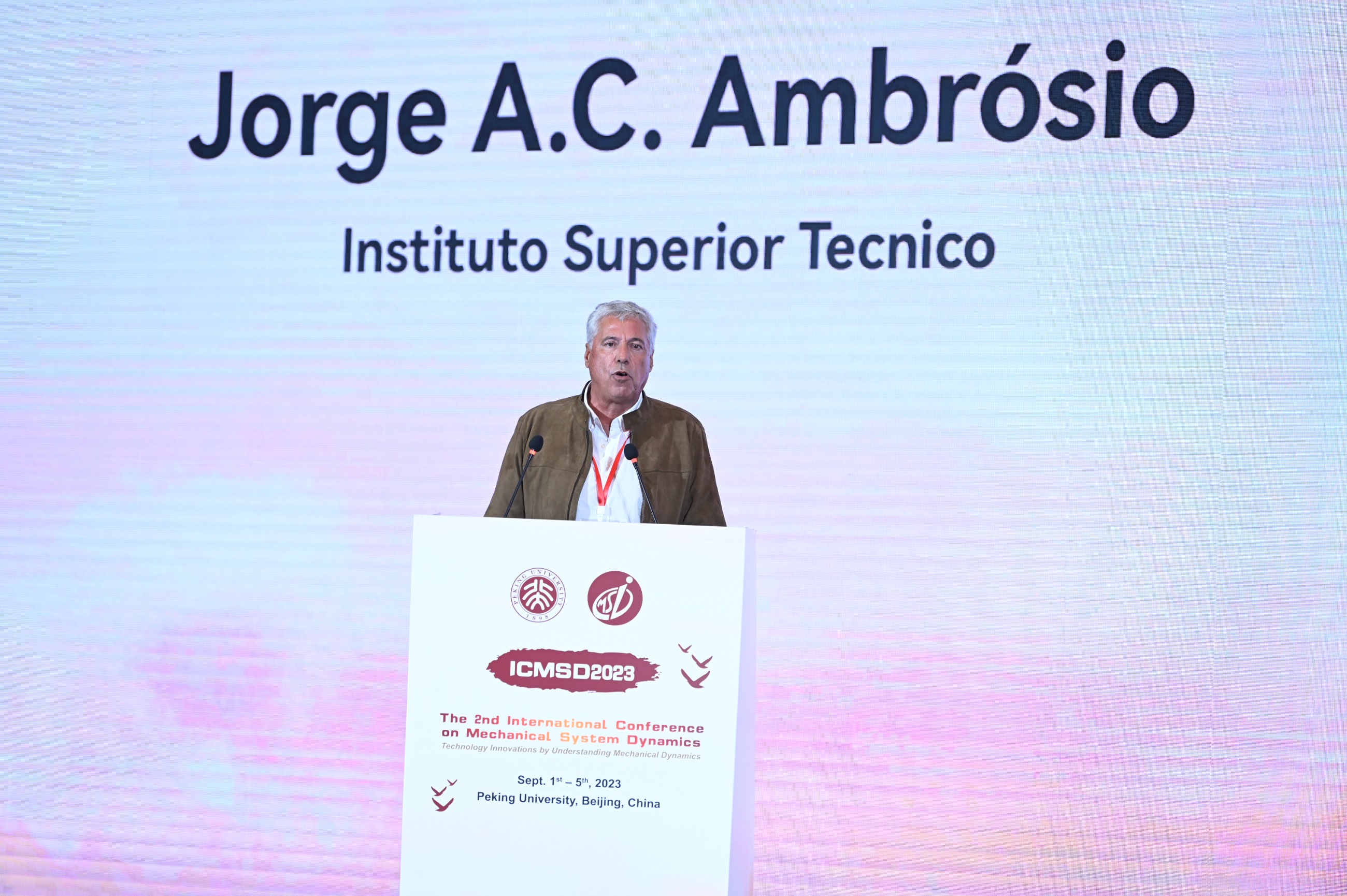 |  |
| Fig.10 Prof. Jorge A. C. Ambrósio gives a plenary and keynote lecture. | Fig.11 Assoc. Prof. Qinbo Zhou gives a plenary and keynote lecture on behalf of Prof. Xiaoting Rui, member of the Chinese Academy of Sciences. |
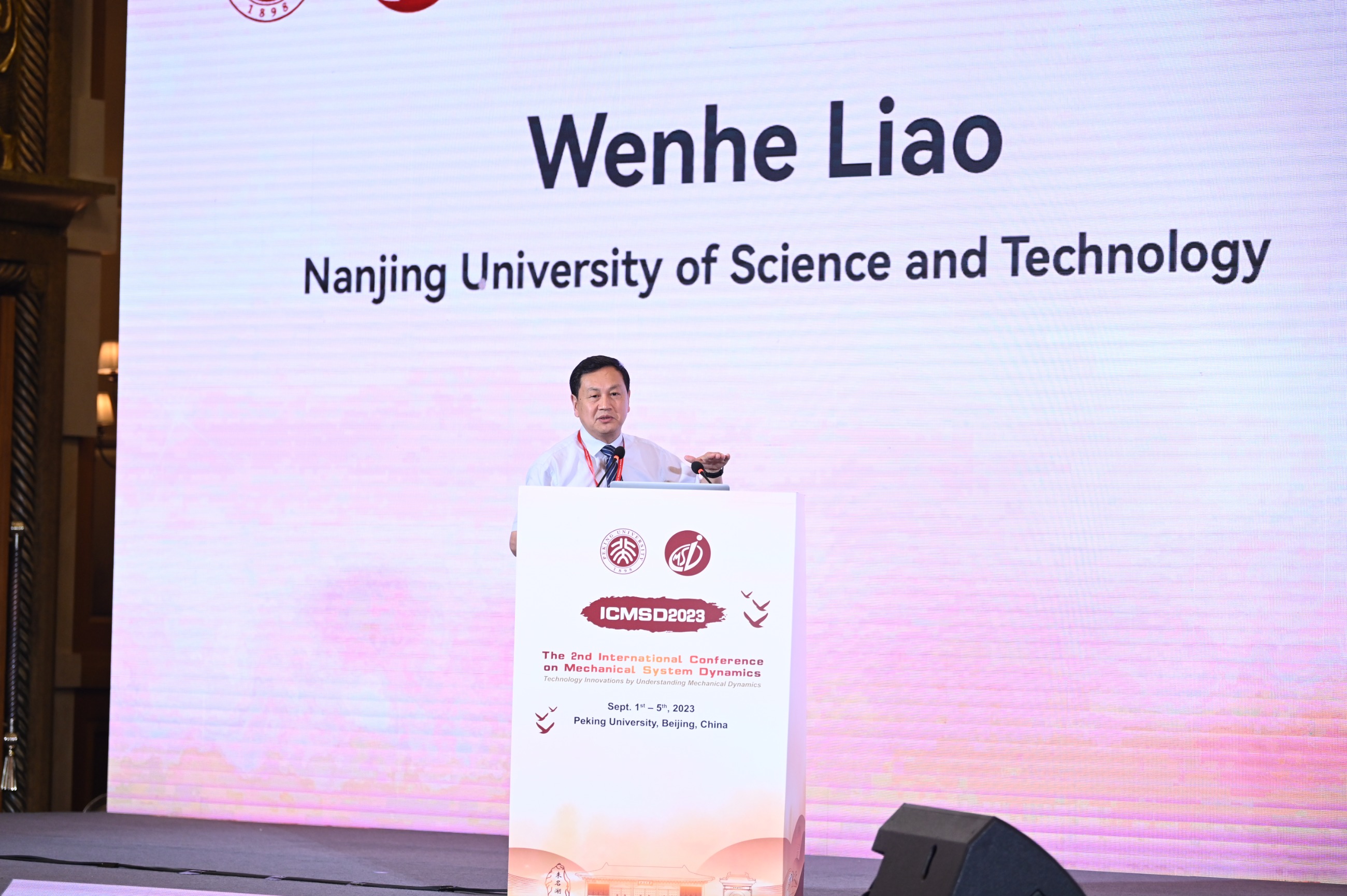 | 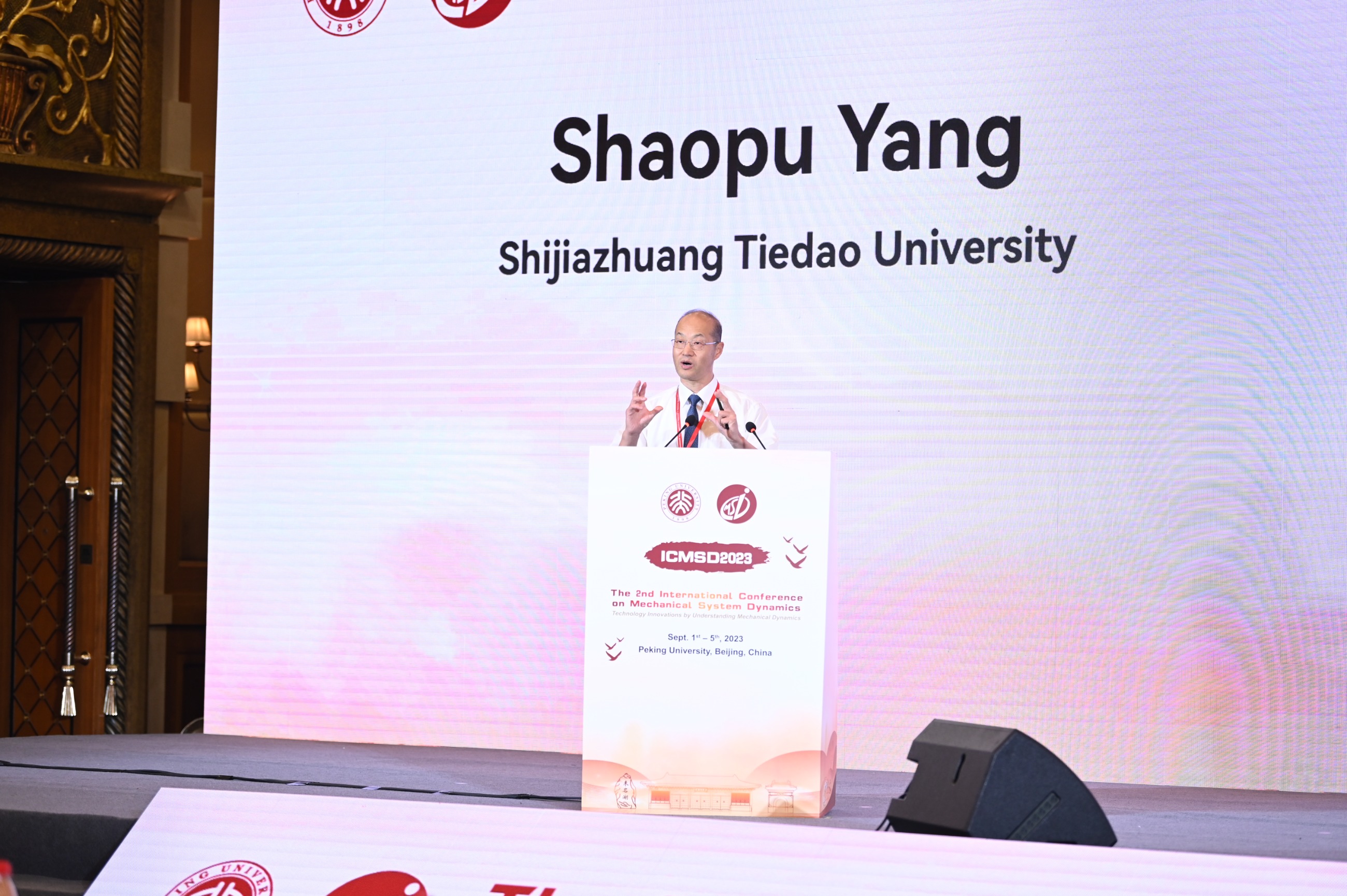 |
| Fig.12 Prof. Wenhe Liao gives a plenary and keynote lecture. | Fig.13 Prof. Shaopu Yang gives a plenary and keynote lecture. |
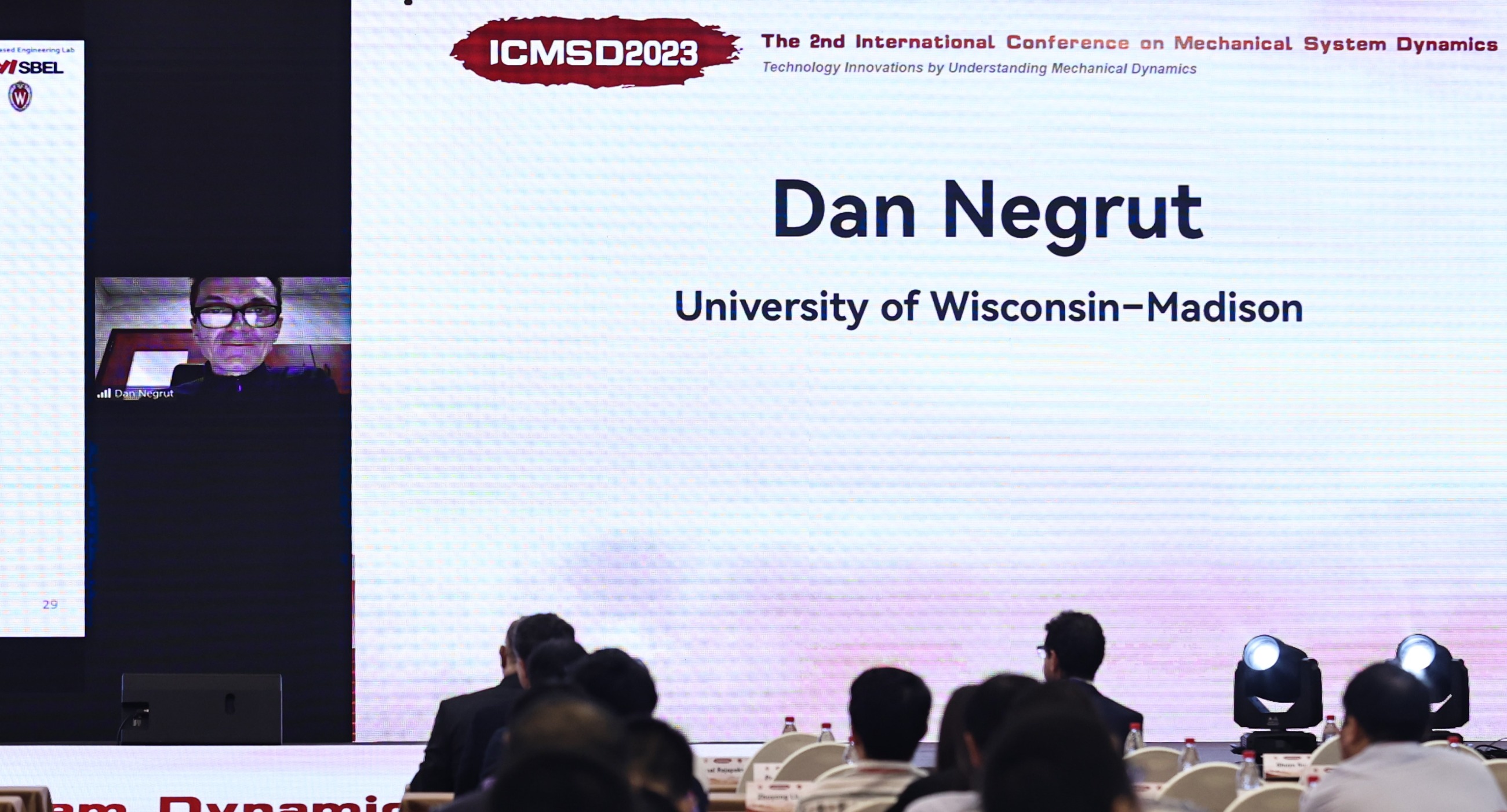
Fig.14 Prof. Dan Negrut gives a plenary and keynote lecture online.
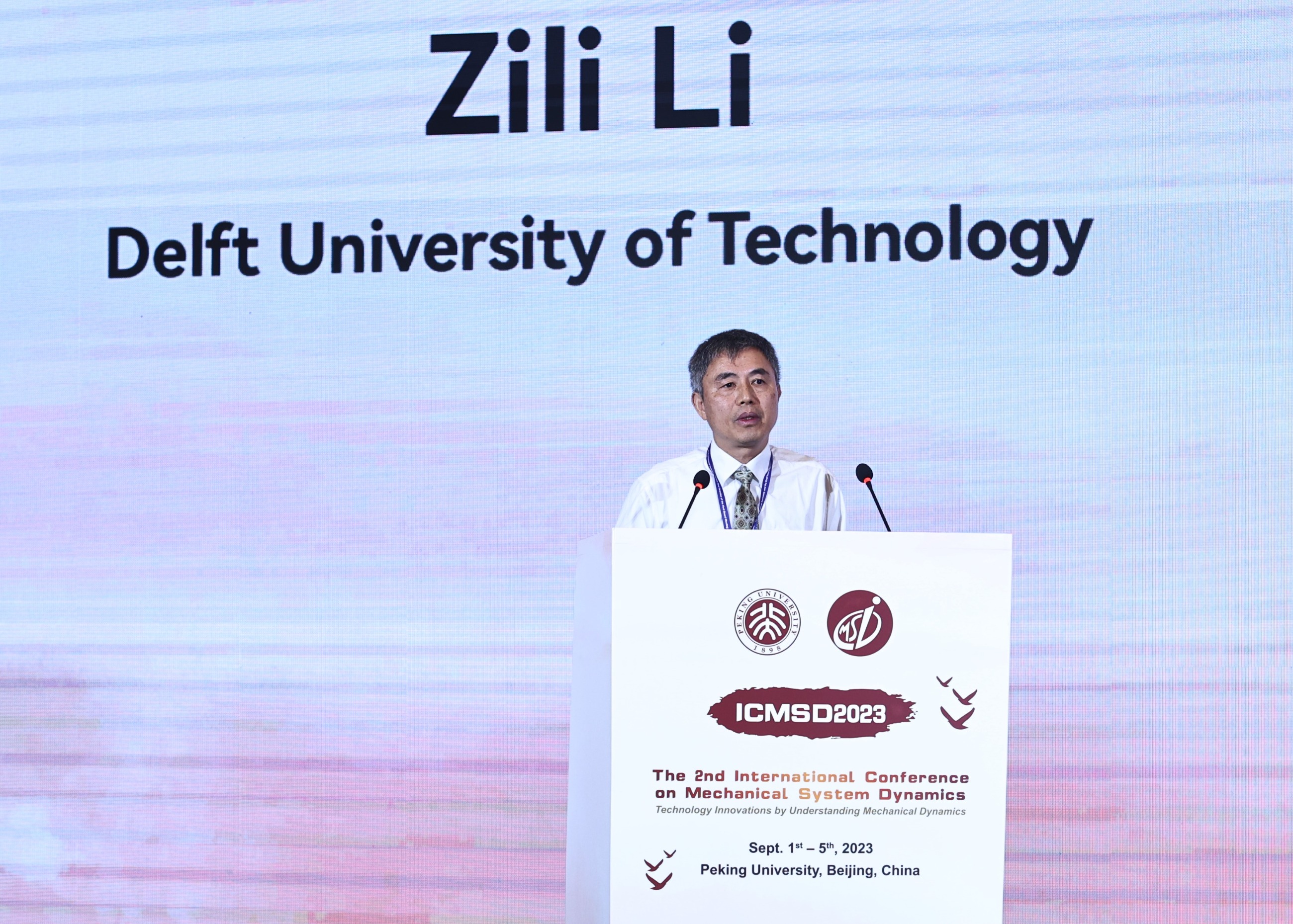 | 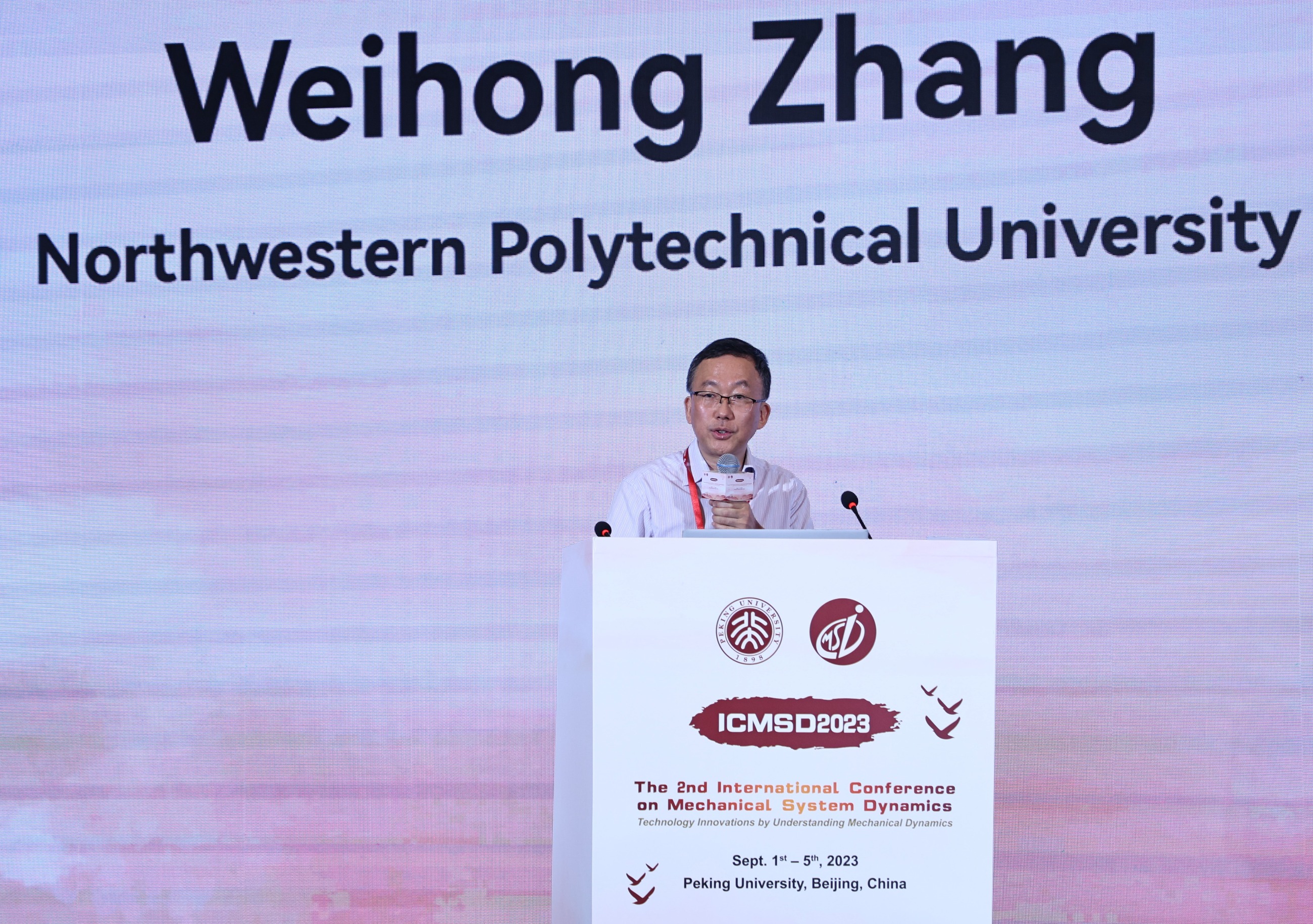 |
| Fig.15 Prof. Zili Li gives a plenary and keynote lecture. | Fig.16 Prof. Weihong Zhang, Member of the Chinese Academy of Sciences, gives a plenary and keynote lecture. |
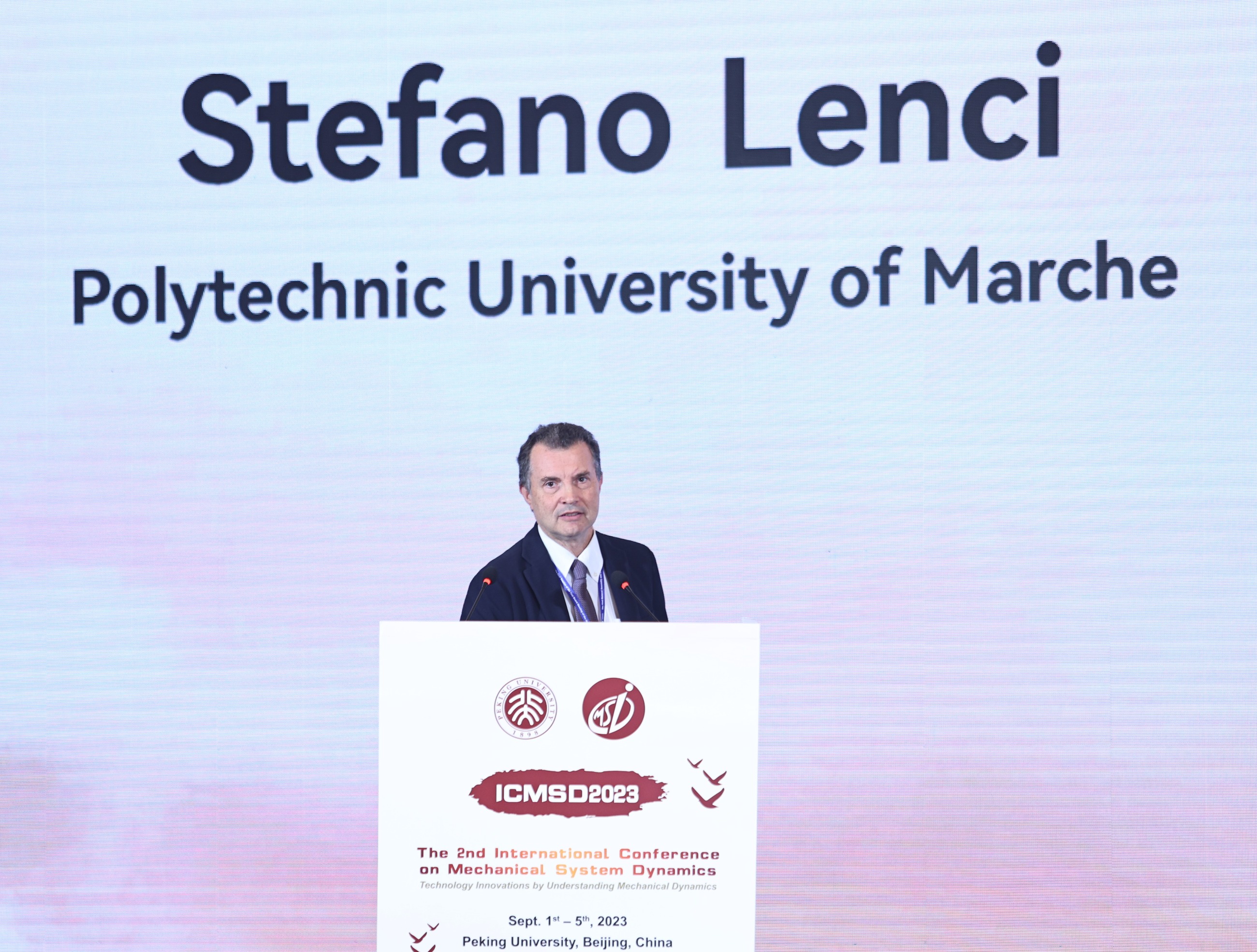 | 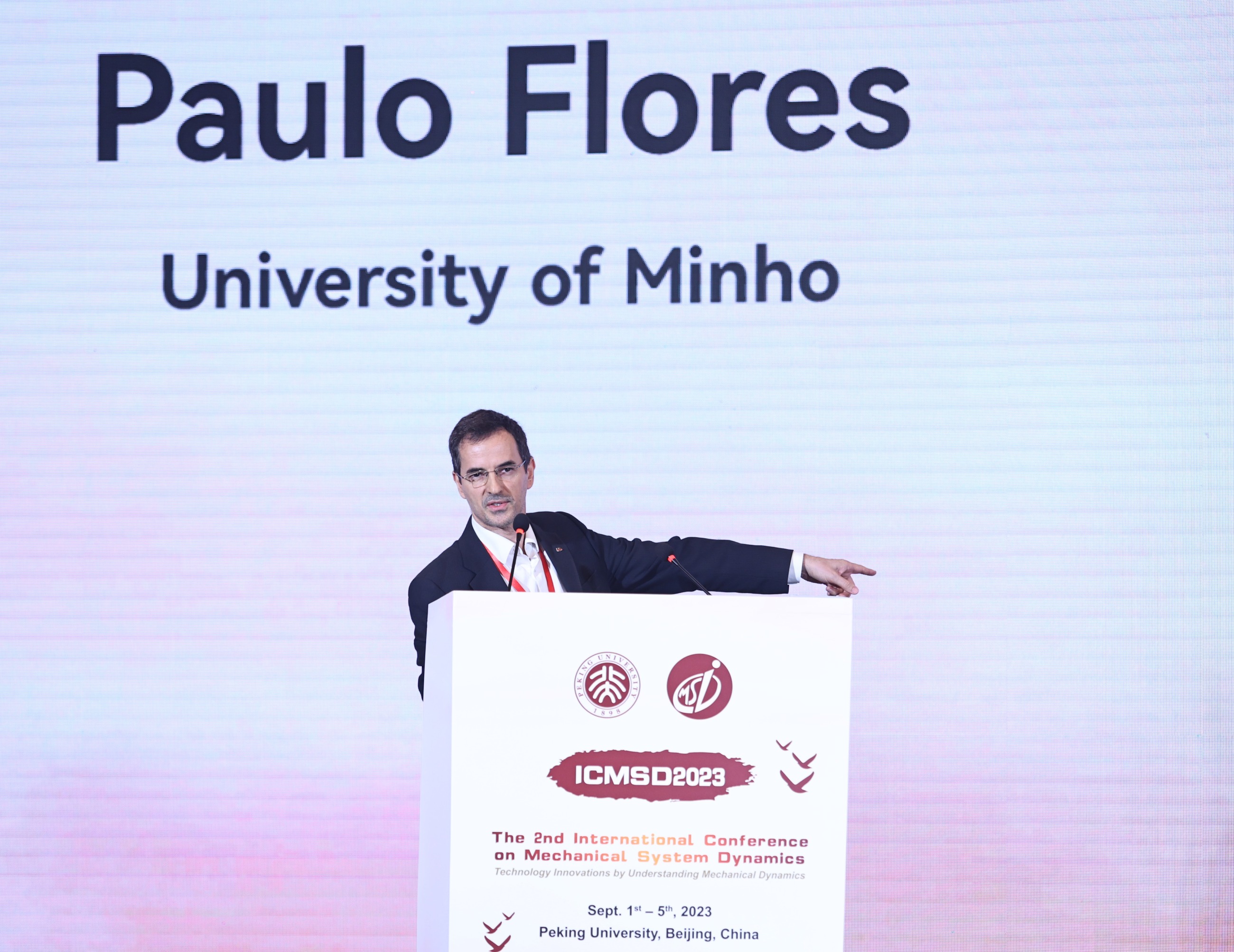 |
| Fig.17 Prof. Stefano Lenci gives a plenary and keynote lecture. | Fig.18 Prof. Paulo Flores gives a plenary and keynote lecture. |
In particular, the plenary and keynote lectures entitled “Comments on the Universality of Multibody System Transfer Matrix Method for Artificial System” presented by Assoc. Prof. Qinbo Zhou on behalf of Prof. Xiaoting Rui introduced the basic principle of the multibody system transfer matrix method (Rui method) to investigate mechanical system dynamics (Figure 11) and illustrated the essential ideas of extending the Rui method to study the dynamics of various artificial systems, involving mechanics, acoustics, optics, electricity, magnetism, and thermology in order to solve the urgent need for rapid modeling and simulation of artificial system dynamics in the design, manufacture, testing, evaluation, and utilization of these systems. The lecture received positive responses and comments from the participants.

 苏公网安备32010202011954号